Stump Grinding in Ocala, FL
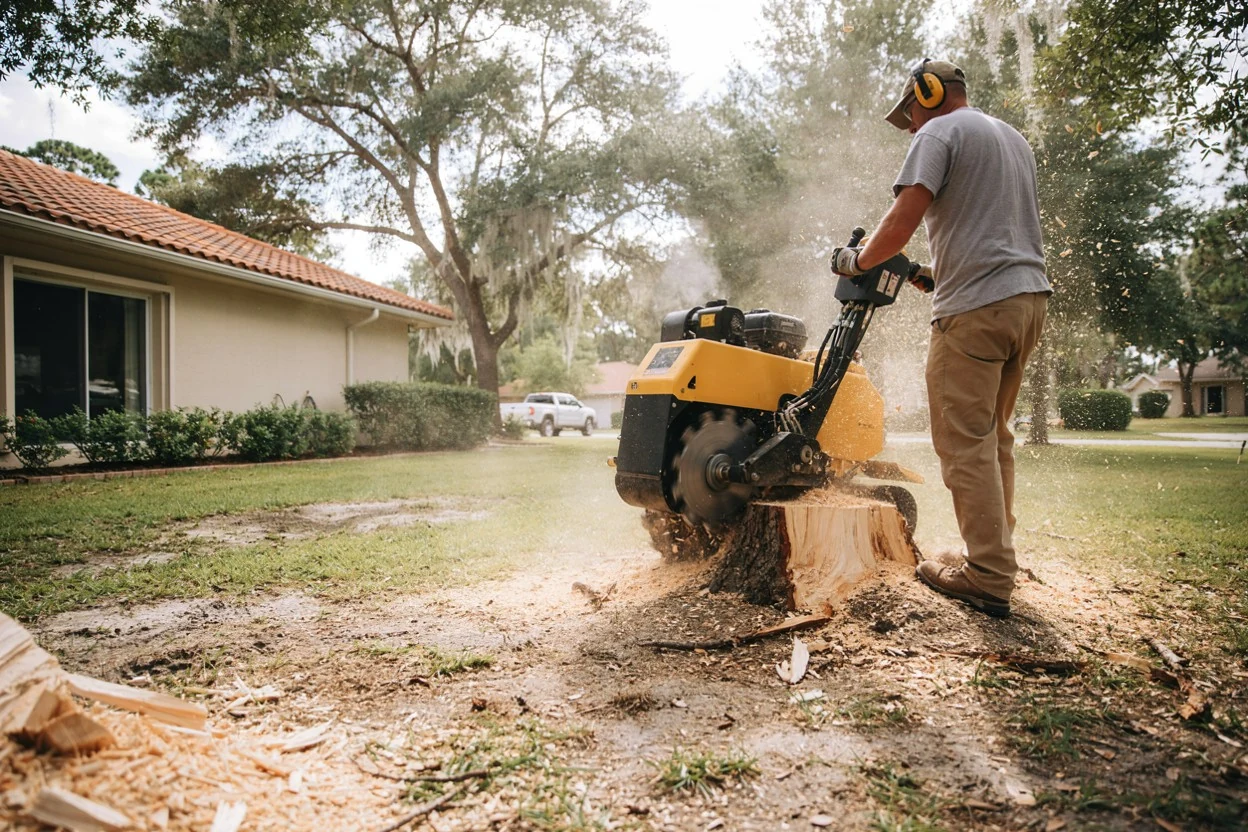
The stump the last crew left "for later." The one the mower has been going around for six years. The three pine stumps where the new fence line has to go. A stump isn't going anywhere on its own — in Marion County sand a pine stump can sit for a decade — and digging one out by hand is a weekend you won't get back.
How grinding works
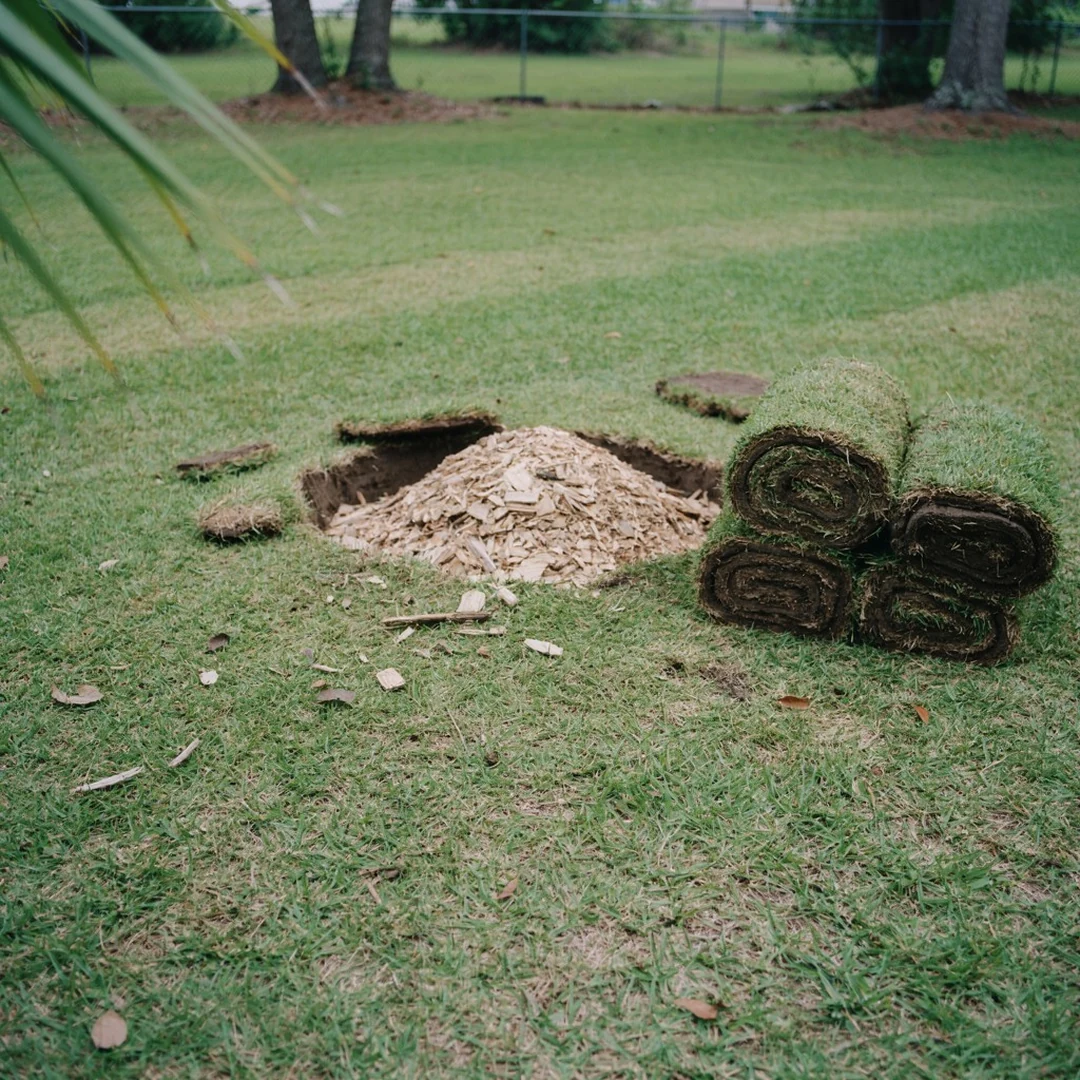
A stump grinder is a cutting wheel on an articulating arm; it chews the stump into chips a few inches at a time. We grind well below grade — typically 6 to 12 inches, deeper if you're planting or putting in a post — and take the main surface roots that would otherwise trip the mower. What's left is a hole full of wood chips and soil. Rake it level, add topsoil, and you can sod or plant over the spot.
The chips are yours if you want them for beds or paths. If not, we haul them.
Before we grind
- We call in a utility locate for stumps near the house or the road — irrigation lines you'll have to show us.
- Tell us if there's a sprinkler head, a septic drain field or a cable run near the stump.
- Grinding is loud and throws chips; we shield windows and cars nearby.
- Deeper grinding for a fence post or a new tree — say so and we'll go down further.
- Stumps from someone else's removal are welcome; we batch them around the county.
Tell Us How Many Stumps And How Big
Pricing
Stump grinding is priced by the diameter of the stump and how many there are, and by access — a stump in the front yard is easy, one behind a pool cage or through a gate takes the smaller machine. If we removed the tree, grinding is usually done on the same visit at a lower rate. Call, tell us the size, and you'll get a number.
Why not leave it?
Beyond the mowing and the tripping, old stumps in Florida feed termites and root fungus, and a rotting pine stump is a standing invitation for both to move on to whatever's nearby. It's also the one thing in the yard that never gets better with time.